
Infrared Thermal Imaging Inspections
Many potentially costly home concerns are not immediately visible during a standard visual inspection. Infrared thermal imaging adds another layer of information by detecting temperature differences across walls, ceilings, floors, electrical components, and mechanical systems.
These thermal patterns may reveal conditions associated with missing insulation, air leakage, moisture intrusion, overheated electrical components, and HVAC performance concerns. When used alongside a professional home inspection, infrared technology can help identify areas that warrant closer evaluation before hidden problems lead to property damage, energy loss, or expensive repairs.
What Can an Infrared Inspection Help Detect?
When conditions are suitable, thermal imaging may help identify:
- Missing, compressed, or uneven insulation
- Air leakage around windows, doors, and exterior penetrations
- Possible moisture intrusion in walls, ceilings, or floors
- Temperature anomalies near plumbing fixtures and supply lines
- Overheated electrical panels, breakers, wiring, or connections
- HVAC duct leakage or uneven airflow
- Heating and cooling performance irregularities
- Temperature differences around attic access points
- Areas of unusual heat gain or energy loss
- Radiant floor or plumbing system irregularities
Thermal imaging does not see through walls. Instead, it measures surface temperatures and highlights patterns that may indicate a concealed condition requiring further investigation.
Detect Electrical Temperature Anomalies
Loose connections, overloaded circuits, damaged components, and other electrical concerns may generate abnormal heat. Thermal imaging can help reveal unusually warm areas at electrical panels, breakers, wiring connections, and accessible equipment while those systems are operating.
Not every temperature difference indicates a defect, but significant anomalies can help direct attention to areas that may require evaluation by a licensed electrician.
Improve Energy Efficiency and Indoor Comfort
In Southern Arizona, missing insulation and air leakage can significantly affect indoor comfort and cooling costs. Tucson’s prolonged heat places heavy demands on air-conditioning systems, especially when conditioned air escapes or outdoor heat enters through gaps in the building envelope.
An infrared inspection may help locate temperature differences associated with insulation gaps, poorly sealed windows and doors, duct leakage, or other conditions that reduce energy efficiency. Addressing these issues can improve comfort, lessen strain on HVAC equipment, and help homeowners make more informed energy-saving improvements.
Identify Possible Moisture Concerns
Moisture can sometimes produce cooler or warmer surface patterns depending on environmental conditions, evaporation, and the location of the affected material. Infrared imaging may help locate suspicious areas around roofs, plumbing fixtures, exterior walls, windows, and ceilings.
Because temperature differences can have several causes, suspected moisture conditions should be evaluated using additional inspection methods, such as a moisture meter or further assessment by a qualified specialist.
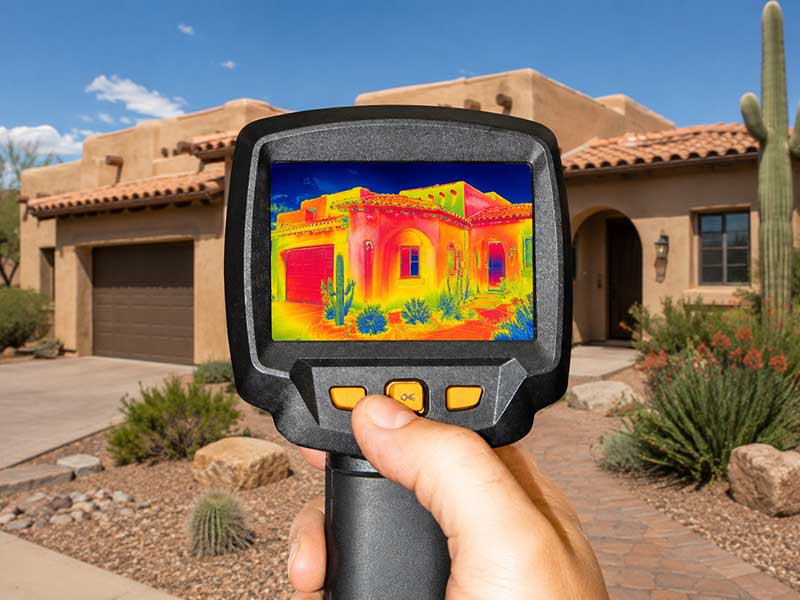
Clear Thermal Documentation
Relevant thermal images and observed concerns can be included in your digital inspection report, along with standard photographs and explanatory notes. This documentation helps you understand where unusual temperature patterns were observed and what additional evaluation or corrective action may be appropriate.
Infrared thermal imaging is most effective when environmental conditions create a sufficient temperature difference between indoor and outdoor surfaces. Results may be affected by weather, sunlight, HVAC operation, building materials, furnishings, and accessibility.
See Beyond the Surface
Whether you are purchasing a home, investigating a suspected moisture or energy-efficiency concern, or evaluating the property you already own, infrared inspection technology can provide valuable information that may not be apparent to the naked eye. Combined with professional judgment and conventional inspection methods, it offers a more comprehensive view of the home’s visible and accessible condition.