
Drone Roof Inspections
Some roofs are difficult—or unsafe—to inspect using traditional access methods. Steep slopes, fragile materials, limited access points, extreme heat, and multi-level construction can prevent an inspector from safely viewing every visible section from the roof surface.
A professional drone roof inspection provides an elevated, high-resolution view of hard-to-reach areas without requiring unnecessary foot traffic on the roofing materials. This technology helps document visible roof conditions while reducing the risk of personal injury or accidental damage to tiles, coatings, and other delicate components.
What Can a Drone Roof Inspection Evaluate?
When weather, airspace restrictions, and site conditions permit, drone imagery may be used to review:
- Roofing materials and surface conditions
- Cracked, slipped, missing, or damaged tiles
- Flat-roof coatings and visible deterioration
- Flashing around roof penetrations
- Chimneys, vents, skylights, and mechanical equipment
- Valleys, ridges, parapet walls, and roof transitions
- Gutters, scuppers, and drainage areas
- Visible debris accumulation or ponding concerns
- Storm, wind, or impact-related damage
- Areas that cannot be safely reached by ladder or walking
High-resolution photographs provide a detailed visual record of observed conditions and can be included in the inspection report when appropriate.
Especially Valuable for Arizona Roofs
Southern Arizona roofs are continually exposed to intense sunlight, extreme heat, dust, high winds, and seasonal monsoon storms. These conditions can accelerate the deterioration of roof coatings, sealants, flashing, tiles, and drainage components.
Drone photography can help identify visible conditions that may contribute to moisture intrusion, heat gain, or reduced energy efficiency. Damaged roofing, deteriorated coatings, displaced materials, and compromised penetrations can allow unwanted heat or moisture to affect the building envelope—the components that separate the home’s interior from the outdoor environment.
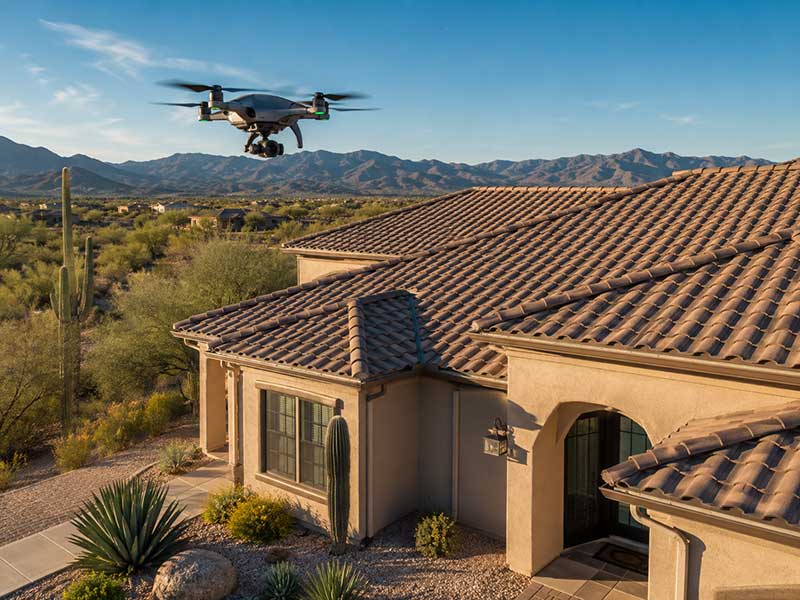
A Safer View Without Unnecessary Roof Traffic
Walking on certain roofing materials can cause damage, particularly when tiles are brittle, surfaces are excessively hot, or roof slopes are unsafe. A drone allows the inspector to obtain closer views of many areas while minimizing direct contact with the roof.
Drone inspections are subject to weather, visibility, local flight restrictions, property conditions, and applicable aviation requirements. They supplement the inspection process but do not provide access beneath roofing materials or reveal concealed conditions.
Clear Documentation for Confident Decisions
Whether you are buying a home, evaluating storm damage, preparing for repairs, or monitoring the condition of your current roof, a drone roof inspection can provide valuable visual information that may not be obtainable from the ground.
You will receive clear documentation of visible concerns, helping you better understand the roof’s condition, prioritize maintenance, and determine when further evaluation by a qualified roofing contractor may be appropriate.